The first away tournament I played in was a complete disaster. Two-hour flight on Thursday evening, hotel near the venue, first match Friday at 8am. I'd never thought about how to travel for sport. I assumed it was a holiday with some padel attached.
I slept 4 hours that Friday morning because the hotel air conditioning rattled. I ate the breakfast buffet not realizing the chorizo on a tense stomach would haunt me by mid-match. I'd packed two palas but no spare grips. My shoes were a different pair than usual because I'd thought it would be nice to break in new ones at the tournament. We lost in three sets to a team we should have beaten on paper.
Walking off the court my partner said something I've never forgotten. We didn't lose to those guys. We lost to bad logistics.
I've travelled to maybe 20 tournaments since. Some near, some far. I've made all the mistakes worth making. Below is what I've learned about arriving at a tournament actually ready to play, not just present.
Why travel preparation matters more than amateurs think
Travel adds layers of stress that compound the normal demands of tournament play.
Sleep gets disrupted. Different bed, different temperature, different sounds, different schedule. Even one night of poor sleep affects everything from reaction time to mood to immune function.
Nutrition gets disrupted. Restaurant meals, hotel breakfasts, unfamiliar foods, awkward timing relative to matches. Most amateur tournament food choices undermine play.
Hydration gets disrupted. Travel days involve lots of sitting (dehydrating). Air conditioning everywhere. Unfamiliar water sources you might not trust.
Equipment can fail or get lost. Spare gear that lives in your home doesn't help you in another city. The pala you forgot to throw in the bag isn't available at 7am Saturday.
Stress accumulates. Logistical hassles, unfamiliar venue, time pressure to find things, partner communication challenges. All before you've hit a ball.
Most amateurs arrive at tournaments having spent zero time thinking about any of this. Then they wonder why they played worse than they expected.
Sleep gets disrupted. Different bed, different temperature, different sounds, different schedule. Even one night of poor sleep affects everything from reaction time to mood to immune function.
Nutrition gets disrupted. Restaurant meals, hotel breakfasts, unfamiliar foods, awkward timing relative to matches. Most amateur tournament food choices undermine play.
Hydration gets disrupted. Travel days involve lots of sitting (dehydrating). Air conditioning everywhere. Unfamiliar water sources you might not trust.
Equipment can fail or get lost. Spare gear that lives in your home doesn't help you in another city. The pala you forgot to throw in the bag isn't available at 7am Saturday.
Stress accumulates. Logistical hassles, unfamiliar venue, time pressure to find things, partner communication challenges. All before you've hit a ball.
Most amateurs arrive at tournaments having spent zero time thinking about any of this. Then they wonder why they played worse than they expected.
Before the trip: the week ahead
Tournament preparation starts a week out, not the day before.
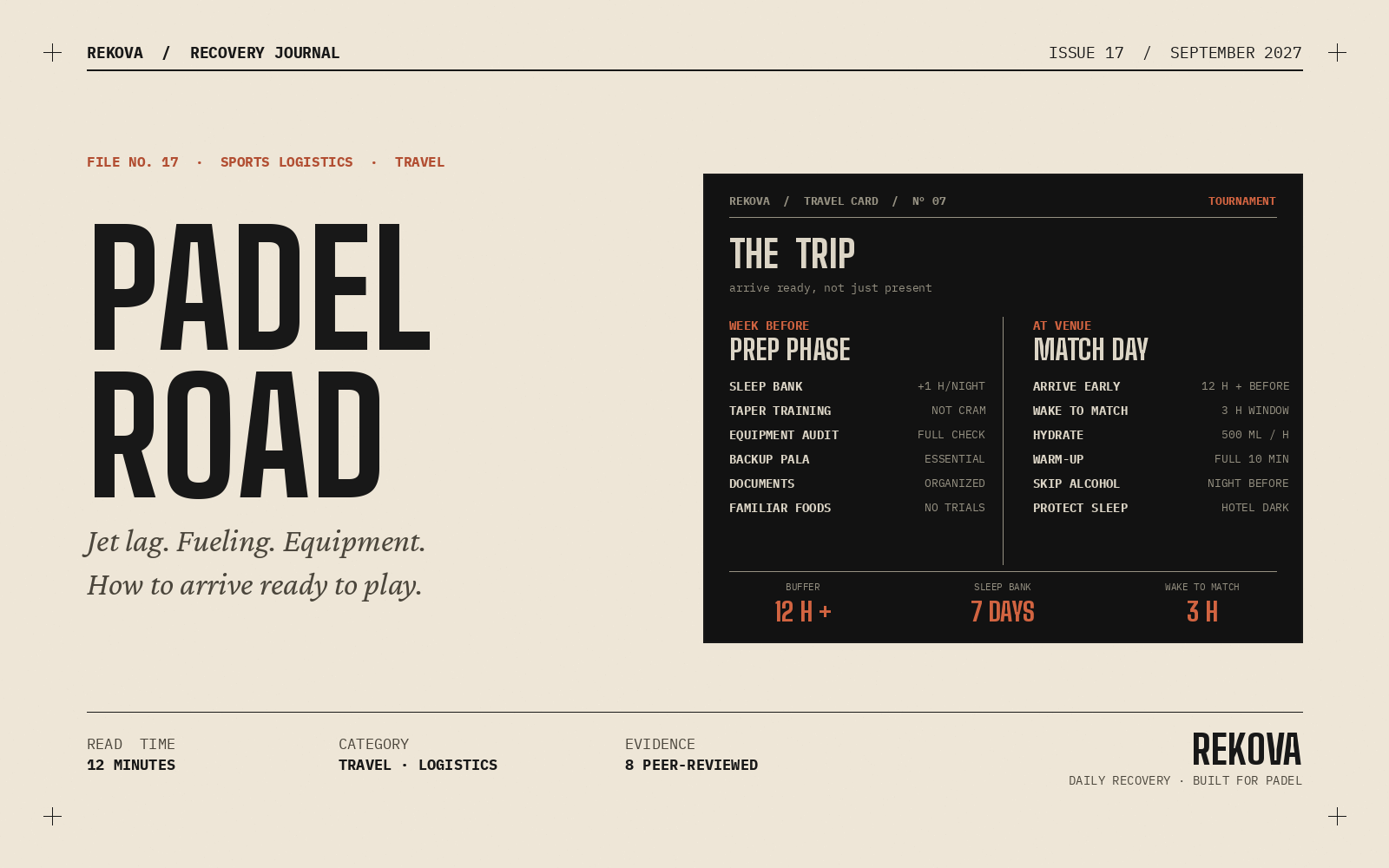
Sleep banking. Add 30 to 60 minutes per night to your usual sleep for 5 to 7 days before travel. Research shows pre-tournament sleep banking provides genuine cognitive and physical reserves. Going into travel already sleep-debted is the worst possible start.
Train down, not up. The temptation is to cram practice the week before a tournament. Resist it. The right approach is to taper. Maintain frequency but reduce intensity. Final hard session 4 to 5 days before the tournament starts. Light technical work after that.
Nutrition stabilization. Eat your normal foods. Don't experiment with new diets or supplements in the week before tournament travel. Stable digestion matters more than dietary optimization.
Equipment audit. Pull out your tournament bag a week before. Verify pala condition. Check grip tape. Inspect shoes. Ensure spare grips, wristbands, headbands. Backup pala if you have one. The audit two days before is too late if you find a problem.
Documents. For tournaments requiring registration confirmation, identity documents, travel insurance information, gather everything early. Make a checklist.
Mental preparation. Light visualization of playing well. Reviewing your typical patterns mentally. Reading something inspiring. Building the mental file you'll draw on under pressure.
Sleep banking. Add 30 to 60 minutes per night to your usual sleep for 5 to 7 days before travel. Research shows pre-tournament sleep banking provides genuine cognitive and physical reserves. Going into travel already sleep-debted is the worst possible start.
Train down, not up. The temptation is to cram practice the week before a tournament. Resist it. The right approach is to taper. Maintain frequency but reduce intensity. Final hard session 4 to 5 days before the tournament starts. Light technical work after that.
Nutrition stabilization. Eat your normal foods. Don't experiment with new diets or supplements in the week before tournament travel. Stable digestion matters more than dietary optimization.
Equipment audit. Pull out your tournament bag a week before. Verify pala condition. Check grip tape. Inspect shoes. Ensure spare grips, wristbands, headbands. Backup pala if you have one. The audit two days before is too late if you find a problem.
Documents. For tournaments requiring registration confirmation, identity documents, travel insurance information, gather everything early. Make a checklist.
Mental preparation. Light visualization of playing well. Reviewing your typical patterns mentally. Reading something inspiring. Building the mental file you'll draw on under pressure.
What to pack: the actual list
Equipment.
Primary pala. Backup pala if you have one (recommended for any serious tournament). Spare grips minimum 2. Spare overgrips minimum 4. Padel-specific shoes (your usual pair, broken in). Backup shoes if available. Spare laces. Wristbands and headband.
Clothing.
Two complete match outfits per day of the tournament. Multiple pairs of socks. Compression sleeves or socks if you use them. Light layer for warm-up. Weather contingency layer (rain shell or wind layer for outdoor courts).
Hydration and nutrition.
Filled water bottle for travel day. Electrolyte mix (powder or tablets) in original packaging. Bars or quick snacks that match what you usually eat. Your daily Rekova or whatever recovery drink you use. Avoid completely new foods.
First aid and recovery.
Tape (kinesiology and athletic tape). Blister kit (moleskin, scissors, antiseptic). Ibuprofen or your usual anti-inflammatory. Tiger balm or similar for muscle relief. Lacrosse ball or small mobility tool. Foam roller if travelling by car. Bandages for cuts.
Documents and money.
ID and tournament confirmation. Travel insurance card. Some local cash beyond what you think you need. Phone charger and battery pack. Important phone numbers written down (not just in phone).
The forgotten essentials.
Earplugs. Sleep mask. Reusable shopping bag (for tournament merchandise or shopping). Sunscreen. Lip balm. Hat.
The overall principle. Pack what you'd need if you couldn't buy anything at the destination. Many amateur tournament locations have limited shopping options.
Primary pala. Backup pala if you have one (recommended for any serious tournament). Spare grips minimum 2. Spare overgrips minimum 4. Padel-specific shoes (your usual pair, broken in). Backup shoes if available. Spare laces. Wristbands and headband.
Clothing.
Two complete match outfits per day of the tournament. Multiple pairs of socks. Compression sleeves or socks if you use them. Light layer for warm-up. Weather contingency layer (rain shell or wind layer for outdoor courts).
Hydration and nutrition.
Filled water bottle for travel day. Electrolyte mix (powder or tablets) in original packaging. Bars or quick snacks that match what you usually eat. Your daily Rekova or whatever recovery drink you use. Avoid completely new foods.
First aid and recovery.
Tape (kinesiology and athletic tape). Blister kit (moleskin, scissors, antiseptic). Ibuprofen or your usual anti-inflammatory. Tiger balm or similar for muscle relief. Lacrosse ball or small mobility tool. Foam roller if travelling by car. Bandages for cuts.
Documents and money.
ID and tournament confirmation. Travel insurance card. Some local cash beyond what you think you need. Phone charger and battery pack. Important phone numbers written down (not just in phone).
The forgotten essentials.
Earplugs. Sleep mask. Reusable shopping bag (for tournament merchandise or shopping). Sunscreen. Lip balm. Hat.
The overall principle. Pack what you'd need if you couldn't buy anything at the destination. Many amateur tournament locations have limited shopping options.
Travel day: how to arrive less destroyed
The travel itself matters. Most amateurs arrive worse than they need to.
Sleep the night before travel. Don't pack and prepare until midnight. The night before travel is when sleep banking pays off most. Pack early, get to bed at your normal time.
Hydration on travel day. Aim for 250 ml per hour of total travel time. Air travel particularly dries you out. Add electrolytes if travel is over 3 hours.
Movement during travel. Walk around airports and train stations. Stretch at any opportunity. If driving, stop every 90 minutes for 5 minutes of walking. Sitting for 6 hours straight stiffens hips and back in ways that affect play.
Food on travel day. Eat normal-ish meals at your usual times. Avoid heavy unfamiliar food. Avoid alcohol entirely. The bag of chips and beer on the flight is not a tournament prep meal.
Arrive early. Plan to arrive at least 12 hours before your first match. Earlier if possible. Last-minute arrivals are the most stress-loaded.
Sleep priority on arrival night. Whatever the temptation to explore the destination or socialize, sleep is the priority. Hotel room, dim lights, earlier than feels necessary.
Sleep the night before travel. Don't pack and prepare until midnight. The night before travel is when sleep banking pays off most. Pack early, get to bed at your normal time.
Hydration on travel day. Aim for 250 ml per hour of total travel time. Air travel particularly dries you out. Add electrolytes if travel is over 3 hours.
Movement during travel. Walk around airports and train stations. Stretch at any opportunity. If driving, stop every 90 minutes for 5 minutes of walking. Sitting for 6 hours straight stiffens hips and back in ways that affect play.
Food on travel day. Eat normal-ish meals at your usual times. Avoid heavy unfamiliar food. Avoid alcohol entirely. The bag of chips and beer on the flight is not a tournament prep meal.
Arrive early. Plan to arrive at least 12 hours before your first match. Earlier if possible. Last-minute arrivals are the most stress-loaded.
Sleep priority on arrival night. Whatever the temptation to explore the destination or socialize, sleep is the priority. Hotel room, dim lights, earlier than feels necessary.
Jet lag if you're crossing time zones
Most amateur tournaments don't involve major time zone changes. International or transcontinental tournaments are different.
Eastward travel is harder than westward. Going east means going to bed earlier than your body wants. Going west means staying up later, which is easier.
Pre-adjust if possible. For trips of 4 or more hours difference, start shifting your bedtime by 30 to 60 minutes per day in the right direction starting 3 to 4 days before travel.
On the plane. Set your watch to destination time immediately. Eat and sleep according to destination time, not departure time.
At destination. Get morning sunlight exposure for at least 30 minutes daily. This is the single most effective jet lag remedy. Light is the primary signal to your circadian rhythm.
Melatonin can help. Small doses (0.3 to 1 mg) taken at destination bedtime for 3 to 4 days speeds adjustment. The 5 to 10 mg products are way too high.
Avoid alcohol on travel days and the first day at destination. Alcohol disrupts sleep architecture and slows circadian adjustment.
Expect performance to be off the first 1 to 2 days. Don't catastrophize. Some research suggests you adjust about 1 day per time zone crossed.
Plan accordingly. If you're crossing 6 time zones for a tournament, arriving 5 to 7 days before play is significantly better than 2 days before.
Eastward travel is harder than westward. Going east means going to bed earlier than your body wants. Going west means staying up later, which is easier.
Pre-adjust if possible. For trips of 4 or more hours difference, start shifting your bedtime by 30 to 60 minutes per day in the right direction starting 3 to 4 days before travel.
On the plane. Set your watch to destination time immediately. Eat and sleep according to destination time, not departure time.
At destination. Get morning sunlight exposure for at least 30 minutes daily. This is the single most effective jet lag remedy. Light is the primary signal to your circadian rhythm.
Melatonin can help. Small doses (0.3 to 1 mg) taken at destination bedtime for 3 to 4 days speeds adjustment. The 5 to 10 mg products are way too high.
Avoid alcohol on travel days and the first day at destination. Alcohol disrupts sleep architecture and slows circadian adjustment.
Expect performance to be off the first 1 to 2 days. Don't catastrophize. Some research suggests you adjust about 1 day per time zone crossed.
Plan accordingly. If you're crossing 6 time zones for a tournament, arriving 5 to 7 days before play is significantly better than 2 days before.
At the venue: pre-tournament protocol
Most tournament venues offer some practice time or warm-up sessions before competition starts. Use them strategically.
Walk the courts the day before. If allowed, hit balls on the actual tournament courts you'll play on. Different surfaces, different wall behavior, different lighting all affect play. Familiarity reduces variability.
Check practical logistics. Where are the changing rooms? Where can you eat between matches? Are there water sources? Where will you wait if it rains? Knowing this in advance reduces day-of stress.
Build a temporary routine. Wake-up time, breakfast time, arrival at venue, warm-up start. The routine reduces mental load on tournament day.
Meet your partner if you don't play with them regularly. If you've teamed up with someone specifically for this tournament, do a practice session together. Communication patterns and tactical preferences need basic alignment.
Avoid social drinking the night before competition. Tournaments often have organized dinners, welcome events. Attend but skip alcohol. The next day's matches matter more than the social bonding tonight.
Walk the courts the day before. If allowed, hit balls on the actual tournament courts you'll play on. Different surfaces, different wall behavior, different lighting all affect play. Familiarity reduces variability.
Check practical logistics. Where are the changing rooms? Where can you eat between matches? Are there water sources? Where will you wait if it rains? Knowing this in advance reduces day-of stress.
Build a temporary routine. Wake-up time, breakfast time, arrival at venue, warm-up start. The routine reduces mental load on tournament day.
Meet your partner if you don't play with them regularly. If you've teamed up with someone specifically for this tournament, do a practice session together. Communication patterns and tactical preferences need basic alignment.
Avoid social drinking the night before competition. Tournaments often have organized dinners, welcome events. Attend but skip alcohol. The next day's matches matter more than the social bonding tonight.
Match day: the morning of
Tournament match day morning routine has a few specifics.
Wake-up timing. Allow 3 hours minimum between waking and first match. Match-day cognitive function peaks 3 to 4 hours after waking for most people.
Breakfast about 2.5 to 3 hours before first match. Familiar foods. Some carbohydrates. Some protein. Moderate fat. Not the hotel buffet's most exciting offerings. I covered match nutrition in detail in my padel nutrition article.
Hydration through the morning. 500 ml of fluid in the hour after waking. Light electrolytes okay if you usually use them.
Arrival at venue 60 to 90 minutes before match. Time for changing, mobility work, full warm-up, and last-minute restroom visits.
Warm-up. Your normal 10-minute mobility protocol. I covered this in detail in my mobility article. Don't skip it. Don't extend it.
Mental preparation. 5 to 10 minutes of breath work, brief visualization, your cue word. Stay off social media. Limit conversations with people who increase your stress.
Wake-up timing. Allow 3 hours minimum between waking and first match. Match-day cognitive function peaks 3 to 4 hours after waking for most people.
Breakfast about 2.5 to 3 hours before first match. Familiar foods. Some carbohydrates. Some protein. Moderate fat. Not the hotel buffet's most exciting offerings. I covered match nutrition in detail in my padel nutrition article.
Hydration through the morning. 500 ml of fluid in the hour after waking. Light electrolytes okay if you usually use them.
Arrival at venue 60 to 90 minutes before match. Time for changing, mobility work, full warm-up, and last-minute restroom visits.
Warm-up. Your normal 10-minute mobility protocol. I covered this in detail in my mobility article. Don't skip it. Don't extend it.
Mental preparation. 5 to 10 minutes of breath work, brief visualization, your cue word. Stay off social media. Limit conversations with people who increase your stress.
Between matches in same-day tournaments
The 30 to 120 minutes between matches is recovery time, not vacation time.
Immediate post-match. Drink fluids with electrolytes. Light snack. Sit in a comfortable place. Avoid analyzing what just happened in detail.
Mid-recovery. Light food if more than 60 minutes until next match. Aim for easily digestible carbohydrates plus some protein. Banana with peanut butter. Energy bar. Small sandwich. Avoid heavy or fatty foods.
Pre-next-match. Restart your warm-up routine 15 to 20 minutes before next match. Lighter than initial warm-up since you're already warm.
Mental reset. The previous match is over. Don't watch other matches obsessively. Don't replay your missed shots mentally. The next match is a different match.
Immediate post-match. Drink fluids with electrolytes. Light snack. Sit in a comfortable place. Avoid analyzing what just happened in detail.
Mid-recovery. Light food if more than 60 minutes until next match. Aim for easily digestible carbohydrates plus some protein. Banana with peanut butter. Energy bar. Small sandwich. Avoid heavy or fatty foods.
Pre-next-match. Restart your warm-up routine 15 to 20 minutes before next match. Lighter than initial warm-up since you're already warm.
Mental reset. The previous match is over. Don't watch other matches obsessively. Don't replay your missed shots mentally. The next match is a different match.
After elimination
Whether you won the tournament or got eliminated round one, the post-tournament protocol matters for recovery.
Hydrate properly. Several hours of replenishment. Electrolytes.
Eat a substantial meal. Carbohydrates, protein, vegetables. Avoid the temptation to skip eating from disappointment.
Limit alcohol that night. Recovery is the priority. The celebration or commiseration can be moderate.
Sleep that night and the next. Likely longer than usual. Multi-day tournaments accumulate significant sleep debt.
Light movement the next day, not no movement. Walking, easy mobility work. Your body is stiff and full of inflammation. Light movement helps clear it.
Real analysis 48 to 72 hours later. Right after a tournament, you can't think clearly about what happened. Wait two days, then look at the patterns. What worked, what didn't. Notes for next time.
Hydrate properly. Several hours of replenishment. Electrolytes.
Eat a substantial meal. Carbohydrates, protein, vegetables. Avoid the temptation to skip eating from disappointment.
Limit alcohol that night. Recovery is the priority. The celebration or commiseration can be moderate.
Sleep that night and the next. Likely longer than usual. Multi-day tournaments accumulate significant sleep debt.
Light movement the next day, not no movement. Walking, easy mobility work. Your body is stiff and full of inflammation. Light movement helps clear it.
Real analysis 48 to 72 hours later. Right after a tournament, you can't think clearly about what happened. Wait two days, then look at the patterns. What worked, what didn't. Notes for next time.
Where Rekova fits
Tournament travel disrupts the routines that normally provide steady nutrition. Daily nutritional support becomes more important, not less.
The single sachet daily routine. Easy to pack. Doesn't require refrigeration. Doesn't require ingredients you'd have at home. Hydrates plus provides electrolytes plus magnesium plus B vitamins plus vitamin C plus other recovery support.
For multi-day tournaments specifically, the consistency of one familiar product matters. You know how your body responds to it. Adding new supplements during a tournament is risky. Sticking with your normal routine is safer.
EFSA confirms magnesium contributes to reduction of tiredness and fatigue, normal muscle function, and normal psychological function. EFSA confirms vitamin C contributes to reduction of tiredness and fatigue and normal collagen formation. EFSA confirms B vitamins contribute to normal energy yielding metabolism.
The baseline you can pack in your suitcase.
The single sachet daily routine. Easy to pack. Doesn't require refrigeration. Doesn't require ingredients you'd have at home. Hydrates plus provides electrolytes plus magnesium plus B vitamins plus vitamin C plus other recovery support.
For multi-day tournaments specifically, the consistency of one familiar product matters. You know how your body responds to it. Adding new supplements during a tournament is risky. Sticking with your normal routine is safer.
EFSA confirms magnesium contributes to reduction of tiredness and fatigue, normal muscle function, and normal psychological function. EFSA confirms vitamin C contributes to reduction of tiredness and fatigue and normal collagen formation. EFSA confirms B vitamins contribute to normal energy yielding metabolism.
The baseline you can pack in your suitcase.
FAQ: questions about tournament travel
How early should I arrive before my first match? 12 hours minimum the night before. 36 to 48 hours if you can. Same-day arrivals are too stressful for serious play.
Should I practice on tournament courts beforehand if allowed? Yes, at least one session.
How do I deal with the tournament organizer's food at the venue? Eat what looks familiar to your normal diet. Skip unfamiliar foods regardless of how good they look. Tournament food poisoning is real.
Can I trust the tournament water? Usually yes in developed countries. If in doubt, bottled water.
What if my pala breaks at a tournament? Why I recommend a backup pala. Tournament shops sometimes exist but rarely have your exact pala. The backup needs to be a pala you've actually played with before, not a brand new one.
How do I handle a difficult partner at tournaments? Keep communication brief and tactical during play. Address relationship issues after the tournament. Don't try to coach or correct your partner during a tournament unless you regularly do.
Should I skip a meal the morning of a match if I'm nervous? No. Eat something even if appetite is reduced. Match performance in fasted state is significantly worse.
Is alcohol okay at tournament dinners? Generally no. The social cost of declining is small. The performance cost the next day is large.
How do I sleep in a noisy hotel? Earplugs (good ones). Sleep mask. White noise app on phone. Air conditioning fan can mask traffic sounds. Hotel room high up tends to be quieter.
What about playing if I'm sick at a tournament? Depends on severity. Light cold, you can play. Fever, GI symptoms, or significant illness, withdraw. Playing sick risks much worse health outcomes and your performance will be bad anyway.
How do I manage tournament anxiety while travelling alone? Stay in touch with your normal support. Maintain familiar routines as much as possible. Stick to your usual pre-match protocols. Anxiety is normal. Working through your normal routines reduces it.
Should I practice on tournament courts beforehand if allowed? Yes, at least one session.
How do I deal with the tournament organizer's food at the venue? Eat what looks familiar to your normal diet. Skip unfamiliar foods regardless of how good they look. Tournament food poisoning is real.
Can I trust the tournament water? Usually yes in developed countries. If in doubt, bottled water.
What if my pala breaks at a tournament? Why I recommend a backup pala. Tournament shops sometimes exist but rarely have your exact pala. The backup needs to be a pala you've actually played with before, not a brand new one.
How do I handle a difficult partner at tournaments? Keep communication brief and tactical during play. Address relationship issues after the tournament. Don't try to coach or correct your partner during a tournament unless you regularly do.
Should I skip a meal the morning of a match if I'm nervous? No. Eat something even if appetite is reduced. Match performance in fasted state is significantly worse.
Is alcohol okay at tournament dinners? Generally no. The social cost of declining is small. The performance cost the next day is large.
How do I sleep in a noisy hotel? Earplugs (good ones). Sleep mask. White noise app on phone. Air conditioning fan can mask traffic sounds. Hotel room high up tends to be quieter.
What about playing if I'm sick at a tournament? Depends on severity. Light cold, you can play. Fever, GI symptoms, or significant illness, withdraw. Playing sick risks much worse health outcomes and your performance will be bad anyway.
How do I manage tournament anxiety while travelling alone? Stay in touch with your normal support. Maintain familiar routines as much as possible. Stick to your usual pre-match protocols. Anxiety is normal. Working through your normal routines reduces it.
The short version
Tournament travel adds layers of stress that compound competition demands. Sleep banking the week before, careful packing, familiar food choices, and protected sleep on travel days all matter. Arrive at the venue with significant buffer time. Build temporary routines. Manage between-match recovery deliberately. Treat post-tournament recovery seriously. Daily nutritional support becomes more valuable during travel disruption.
The boring fundamentals beat fancy tournament-specific tactics nine times out of ten. Logistics is most of competitive amateur padel.
The boring fundamentals beat fancy tournament-specific tactics nine times out of ten. Logistics is most of competitive amateur padel.
Sources
Halson SL et al. Sleep in elite athletes and nutritional interventions. Sports Medicine. 2024 update.
International Olympic Committee. Consensus statement on jet lag and elite athlete performance. British Journal of Sports Medicine. 2023.
Reilly T et al. Coping with jet-lag: A position statement for the European College of Sport Science. European Journal of Sport Science. 2024.
Forbes-Robertson S et al. Circadian disruption and remedial interventions: effects and interventions for jet lag in elite athletes. Sports Medicine. 2024.
International Society of Sports Nutrition. Position stand on nutrient timing and competition. JISSN. 2024.
ACSM. Position stand on physical activity, weight loss, and altitude during travel. 2024.
Marcos Rivero B. et al. Evolution of Physiological Responses and Fatigue Analysis in Padel Matches. Sensors. 2025.
EFSA. Scientific Opinions on the substantiation of health claims related to magnesium, vitamin C, and B vitamins. EFSA Journal, various years.
This article shares my own experience and general guidance for amateur tournament players. It is not medical advice. If you have any medical condition affecting travel (cardiovascular issues, diabetes, pregnancy, recent surgery), please consult your doctor before significant travel for sport. Air travel and altitude can affect some conditions.
Rekova does not replace proper preparation, training, or nutrition strategy. It is a daily functional drink with electrolytes, magnesium, hydrolyzed collagen, B vitamins, vitamin C, CoQ10, Acetyl-L-Carnitine, and supporting nutrients, formulated as nutritional support for people who play padel regularly.
International Olympic Committee. Consensus statement on jet lag and elite athlete performance. British Journal of Sports Medicine. 2023.
Reilly T et al. Coping with jet-lag: A position statement for the European College of Sport Science. European Journal of Sport Science. 2024.
Forbes-Robertson S et al. Circadian disruption and remedial interventions: effects and interventions for jet lag in elite athletes. Sports Medicine. 2024.
International Society of Sports Nutrition. Position stand on nutrient timing and competition. JISSN. 2024.
ACSM. Position stand on physical activity, weight loss, and altitude during travel. 2024.
Marcos Rivero B. et al. Evolution of Physiological Responses and Fatigue Analysis in Padel Matches. Sensors. 2025.
EFSA. Scientific Opinions on the substantiation of health claims related to magnesium, vitamin C, and B vitamins. EFSA Journal, various years.
This article shares my own experience and general guidance for amateur tournament players. It is not medical advice. If you have any medical condition affecting travel (cardiovascular issues, diabetes, pregnancy, recent surgery), please consult your doctor before significant travel for sport. Air travel and altitude can affect some conditions.
Rekova does not replace proper preparation, training, or nutrition strategy. It is a daily functional drink with electrolytes, magnesium, hydrolyzed collagen, B vitamins, vitamin C, CoQ10, Acetyl-L-Carnitine, and supporting nutrients, formulated as nutritional support for people who play padel regularly.
