I played almost exclusively outdoor padel for my first three years. Madrid weather lets you do that most of the year. When I started travelling for tournaments to clubs that had indoor courts, I assumed it was the same game in a different environment. It isn't.
The first indoor tournament I played, I felt sluggish through the first match without understanding why. My usual amount of warm-up didn't seem to be enough. By the end of the day my body was tired in different ways than from outdoor play. Then the next week I was back on my outdoor court and the ball seemed slower, the surface different, my movement somehow off.
I assumed I was imagining it. I wasn't. The differences between indoor and outdoor padel are real, measurable, and affect what your body experiences. Below is what changes between the two formats and how to adapt to each.
Why the environment matters more than amateurs realize
Padel courts are walled glass structures. The microclimate inside the court is different from the broader environment. Indoor and outdoor venues amplify these differences.
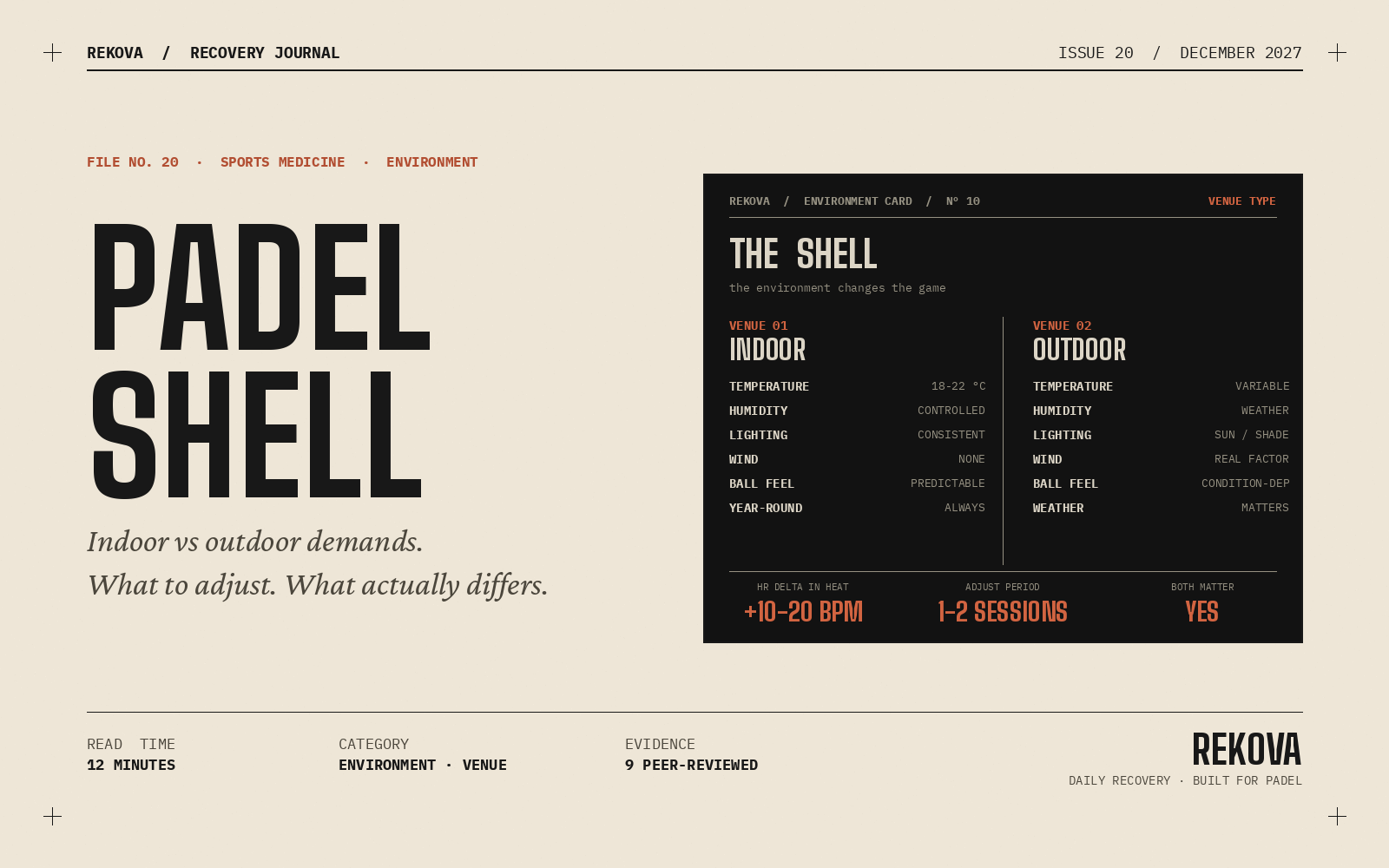
Temperature varies dramatically. Outdoor courts in summer can hit 40 degrees of effective temperature. Indoor courts with proper climate control sit at 18 to 22 degrees year-round. The same player produces different sweat rates, different perceived exertion, and different injury patterns at these extremes.
Humidity differs. Outdoor humidity tracks the regional weather. Indoor humidity is typically controlled, usually 40 to 60 percent. High outdoor humidity (coastal Spain in summer) impairs evaporative cooling. Low indoor humidity (winter heating) dehydrates faster than expected.
Air quality varies. Outdoor air quality depends on pollution levels, pollen, dust. Indoor air quality depends on ventilation, occupant density, and HVAC maintenance. Both can be problematic in different ways.
Light is different. Outdoor courts in midday sun produce intense direct light, possibly glare, and rapidly changing conditions as clouds pass. Indoor courts have consistent artificial lighting that often produces different visual perception of ball trajectory.
Surfaces differ. Outdoor and indoor turf can be technically identical but feel different due to climate effects on the surface. Outdoor turf in cold weather is harder. Outdoor turf in heat is softer and slower. Indoor turf remains consistent.
Ball behavior differs. Cold balls bounce less. Hot balls bounce more. Heavy humid air slows ball flight. Dry indoor air with full pressure balls makes them fly faster.
Mental environment differs. Outdoor includes wind effects, sun considerations, and natural distractions. Indoor includes noise from adjacent courts, gym atmospherics, and absence of natural light cues for time.
Each of these factors compounds with the others. The cumulative effect on your body and play is significant.
Temperature varies dramatically. Outdoor courts in summer can hit 40 degrees of effective temperature. Indoor courts with proper climate control sit at 18 to 22 degrees year-round. The same player produces different sweat rates, different perceived exertion, and different injury patterns at these extremes.
Humidity differs. Outdoor humidity tracks the regional weather. Indoor humidity is typically controlled, usually 40 to 60 percent. High outdoor humidity (coastal Spain in summer) impairs evaporative cooling. Low indoor humidity (winter heating) dehydrates faster than expected.
Air quality varies. Outdoor air quality depends on pollution levels, pollen, dust. Indoor air quality depends on ventilation, occupant density, and HVAC maintenance. Both can be problematic in different ways.
Light is different. Outdoor courts in midday sun produce intense direct light, possibly glare, and rapidly changing conditions as clouds pass. Indoor courts have consistent artificial lighting that often produces different visual perception of ball trajectory.
Surfaces differ. Outdoor and indoor turf can be technically identical but feel different due to climate effects on the surface. Outdoor turf in cold weather is harder. Outdoor turf in heat is softer and slower. Indoor turf remains consistent.
Ball behavior differs. Cold balls bounce less. Hot balls bounce more. Heavy humid air slows ball flight. Dry indoor air with full pressure balls makes them fly faster.
Mental environment differs. Outdoor includes wind effects, sun considerations, and natural distractions. Indoor includes noise from adjacent courts, gym atmospherics, and absence of natural light cues for time.
Each of these factors compounds with the others. The cumulative effect on your body and play is significant.
The physical demands compared
Different environments stress the body differently.
Cardiovascular load. Outdoor hot conditions increase cardiovascular load significantly. The body works harder to dissipate heat at the same exercise intensity. Heart rate can be 10 to 20 bpm higher for the same effort in heat compared to climate-controlled indoor.
Muscular demands. Outdoor cold conditions require more warm-up and longer to feel ready. Cold muscles are stiff muscles. Indoor consistent temperature means warm-up is more predictable.
Joint stress. Cold weather increases joint stiffness, particularly in older players. Some find indoor play significantly easier on joints. Hot outdoor conditions can mask early signs of joint strain by feeling generally uncomfortable.
Tendon resilience. Cold tendons are more brittle. Warm tendons are more elastic. Outdoor winter play increases tendon injury risk compared to indoor play.
Skin and respiratory. Outdoor play exposes skin to UV and air pollutants. Indoor play exposes to whatever HVAC and other players bring. Different exposures, different cumulative impacts.
Hydration needs. Outdoor in heat requires substantially more fluid intake. Indoor in dry conditioned air requires more than most amateurs realize. Both need attention.
Cardiovascular load. Outdoor hot conditions increase cardiovascular load significantly. The body works harder to dissipate heat at the same exercise intensity. Heart rate can be 10 to 20 bpm higher for the same effort in heat compared to climate-controlled indoor.
Muscular demands. Outdoor cold conditions require more warm-up and longer to feel ready. Cold muscles are stiff muscles. Indoor consistent temperature means warm-up is more predictable.
Joint stress. Cold weather increases joint stiffness, particularly in older players. Some find indoor play significantly easier on joints. Hot outdoor conditions can mask early signs of joint strain by feeling generally uncomfortable.
Tendon resilience. Cold tendons are more brittle. Warm tendons are more elastic. Outdoor winter play increases tendon injury risk compared to indoor play.
Skin and respiratory. Outdoor play exposes skin to UV and air pollutants. Indoor play exposes to whatever HVAC and other players bring. Different exposures, different cumulative impacts.
Hydration needs. Outdoor in heat requires substantially more fluid intake. Indoor in dry conditioned air requires more than most amateurs realize. Both need attention.
Indoor padel: specific considerations
Indoor venues have particular characteristics worth knowing.
Consistent temperature and humidity. The big benefit. You can prepare predictably. Same warm-up routine works the same way every time. Sweat rate is consistent. Performance is more reproducible.
Variable air quality. Depends entirely on the venue. Well-ventilated indoor courts are great. Poorly ventilated indoor courts with multiple matches happening simultaneously can have surprisingly poor air quality. Pay attention to how you breathe and whether you feel sluggish even after warming up.
Lighting variation. Different venues have very different lighting. Lower light levels make ball tracking harder. Strong overhead lights can produce glare on the glass walls. Adjust your visual focus during warm-up to the specific venue's lighting.
Noise. Often louder than outdoor courts due to enclosed space and adjacent matches. Mental concentration matters more. Earplugs are sometimes worth considering for important matches.
Smaller margin for error in scheduling. Indoor courts often booked back to back. Less buffer time between sessions. Tournament timing can be tight.
Ball selection. Indoor balls and outdoor balls technically the same, but balls behave differently in different conditions. Many indoor venues use slightly different ball specifications. Worth asking what's standard at venues you play.
Surface consistency. Better. Indoor turf doesn't have seasonal changes. The same ball behavior week to week.
For amateurs whose outdoor play is constrained by weather (winter cold, summer heat, rain), indoor venues offer consistent year-round practice. The trade-off is the cost premium and often less natural feel to the game.
Consistent temperature and humidity. The big benefit. You can prepare predictably. Same warm-up routine works the same way every time. Sweat rate is consistent. Performance is more reproducible.
Variable air quality. Depends entirely on the venue. Well-ventilated indoor courts are great. Poorly ventilated indoor courts with multiple matches happening simultaneously can have surprisingly poor air quality. Pay attention to how you breathe and whether you feel sluggish even after warming up.
Lighting variation. Different venues have very different lighting. Lower light levels make ball tracking harder. Strong overhead lights can produce glare on the glass walls. Adjust your visual focus during warm-up to the specific venue's lighting.
Noise. Often louder than outdoor courts due to enclosed space and adjacent matches. Mental concentration matters more. Earplugs are sometimes worth considering for important matches.
Smaller margin for error in scheduling. Indoor courts often booked back to back. Less buffer time between sessions. Tournament timing can be tight.
Ball selection. Indoor balls and outdoor balls technically the same, but balls behave differently in different conditions. Many indoor venues use slightly different ball specifications. Worth asking what's standard at venues you play.
Surface consistency. Better. Indoor turf doesn't have seasonal changes. The same ball behavior week to week.
For amateurs whose outdoor play is constrained by weather (winter cold, summer heat, rain), indoor venues offer consistent year-round practice. The trade-off is the cost premium and often less natural feel to the game.
Outdoor padel: specific considerations
Outdoor play has its own characteristics.
Weather as variable. Wind, sun, rain, cold, heat all factor in. Some players love this variety. Others find it adds stress.
Sun exposure. Direct sun on outdoor courts requires sunscreen and possibly hat or visor. UV exposure over years compounds significantly. Skin cancer risk for outdoor athletes is real.
Wind effects. Even moderate wind affects ball trajectory and shot selection. Players who play primarily outdoors develop wind-reading skills. Indoor players often struggle with this when switching.
Temperature swings within a session. A morning match can start cold and warm up significantly. Afternoon matches in summer can become brutal as the sun moves. Energy management strategy varies more.
Court conditions vary. Outdoor turf condition depends on maintenance, weather damage, age. Some outdoor courts are excellent. Some are visibly worn or affected by recent rain.
Ball behavior changes. Cold balls in winter bounce less and feel different. Hot balls in summer bounce more and travel faster. Same nominal ball, different actual behavior.
Lower cost typically. Outdoor courts often less expensive to rent. More widely available in good weather. The trade-off is the weather constraint and variable conditions.
Acoustic environment. Outdoor courts have natural acoustics, ambient city or nature sounds, less echoey than indoor. Often more comfortable mentally.
For amateurs who play primarily outdoor, the seasonal variations become part of the game. Many players prefer this richer environmental texture even when conditions are challenging.
Weather as variable. Wind, sun, rain, cold, heat all factor in. Some players love this variety. Others find it adds stress.
Sun exposure. Direct sun on outdoor courts requires sunscreen and possibly hat or visor. UV exposure over years compounds significantly. Skin cancer risk for outdoor athletes is real.
Wind effects. Even moderate wind affects ball trajectory and shot selection. Players who play primarily outdoors develop wind-reading skills. Indoor players often struggle with this when switching.
Temperature swings within a session. A morning match can start cold and warm up significantly. Afternoon matches in summer can become brutal as the sun moves. Energy management strategy varies more.
Court conditions vary. Outdoor turf condition depends on maintenance, weather damage, age. Some outdoor courts are excellent. Some are visibly worn or affected by recent rain.
Ball behavior changes. Cold balls in winter bounce less and feel different. Hot balls in summer bounce more and travel faster. Same nominal ball, different actual behavior.
Lower cost typically. Outdoor courts often less expensive to rent. More widely available in good weather. The trade-off is the weather constraint and variable conditions.
Acoustic environment. Outdoor courts have natural acoustics, ambient city or nature sounds, less echoey than indoor. Often more comfortable mentally.
For amateurs who play primarily outdoor, the seasonal variations become part of the game. Many players prefer this richer environmental texture even when conditions are challenging.
How to adjust between indoor and outdoor
If you switch between environments regularly, adjustments matter.
Warm-up duration. Adjust based on temperature. Cold conditions need 20 to 25 percent more warm-up time. Hot conditions need shorter but more intentional cooling-focused warm-up.
Hydration strategy. Outdoor in heat needs more fluid intake during play. Indoor in dry air still needs deliberate hydration even though you may not feel thirsty.
Clothing layers. Outdoor requires temperature-appropriate gear and possibly weather contingencies. Indoor is predictable. Underdressing slightly for indoor often works since you'll heat up consistently.
Sunscreen and sun protection. Outdoor only consideration. Apply 30 minutes before play. Reapply every 90 minutes during long sessions.
Eyewear. Outdoor sunglasses reduce glare and visual fatigue. Indoor doesn't require them but some players use them for visual consistency.
Ball familiarity. If you play primarily one environment and switch, give yourself a session or two to adjust to the different ball behavior.
Visual adjustment. Indoor and outdoor lighting trains your visual system differently. Switching back and forth requires brief recalibration.
Mental approach. Outdoor includes more environmental management. Indoor allows more focus on opponents and shots without environmental distraction. Both have their challenges.
Warm-up duration. Adjust based on temperature. Cold conditions need 20 to 25 percent more warm-up time. Hot conditions need shorter but more intentional cooling-focused warm-up.
Hydration strategy. Outdoor in heat needs more fluid intake during play. Indoor in dry air still needs deliberate hydration even though you may not feel thirsty.
Clothing layers. Outdoor requires temperature-appropriate gear and possibly weather contingencies. Indoor is predictable. Underdressing slightly for indoor often works since you'll heat up consistently.
Sunscreen and sun protection. Outdoor only consideration. Apply 30 minutes before play. Reapply every 90 minutes during long sessions.
Eyewear. Outdoor sunglasses reduce glare and visual fatigue. Indoor doesn't require them but some players use them for visual consistency.
Ball familiarity. If you play primarily one environment and switch, give yourself a session or two to adjust to the different ball behavior.
Visual adjustment. Indoor and outdoor lighting trains your visual system differently. Switching back and forth requires brief recalibration.
Mental approach. Outdoor includes more environmental management. Indoor allows more focus on opponents and shots without environmental distraction. Both have their challenges.
Tournament play across environments
If your competitive schedule includes both indoor and outdoor venues, plan accordingly.
Practice both regularly. Even if your preferred venue is one type, practice the other regularly. Switching cold to a new environment for an important tournament is sub-optimal.
Arrive at unfamiliar venues earlier. Need time to adjust to lighting, ball behavior, court conditions. Plan 90 to 120 minutes minimum before first match.
Adjust your nutrition strategy. Outdoor hot tournaments need different fueling than indoor climate-controlled events. Plan accordingly.
Plan recovery between matches differently. Indoor consistent conditions mean predictable recovery time. Outdoor variable conditions may require longer recovery between matches.
Mental preparation differs. Outdoor needs strategies for environmental management. Indoor needs strategies for sustained focus in artificial environment.
The pros switch between environments routinely on the World Padel Tour. They prepare for both. Amateurs benefit from doing the same when their competitive schedule demands it.
Practice both regularly. Even if your preferred venue is one type, practice the other regularly. Switching cold to a new environment for an important tournament is sub-optimal.
Arrive at unfamiliar venues earlier. Need time to adjust to lighting, ball behavior, court conditions. Plan 90 to 120 minutes minimum before first match.
Adjust your nutrition strategy. Outdoor hot tournaments need different fueling than indoor climate-controlled events. Plan accordingly.
Plan recovery between matches differently. Indoor consistent conditions mean predictable recovery time. Outdoor variable conditions may require longer recovery between matches.
Mental preparation differs. Outdoor needs strategies for environmental management. Indoor needs strategies for sustained focus in artificial environment.
The pros switch between environments routinely on the World Padel Tour. They prepare for both. Amateurs benefit from doing the same when their competitive schedule demands it.
Health considerations specific to each environment
A few health-related considerations worth noting.
Indoor air quality matters. Poor ventilation plus high occupant density can produce surprisingly polluted air. If you frequently feel sluggish or develop respiratory symptoms after indoor play at a specific venue, the air quality may be the cause. Switch venues if possible.
Outdoor UV exposure compounds. Years of outdoor padel play significantly increase skin cancer risk. Annual dermatology check-ups make sense for regular outdoor players. Sunscreen is non-negotiable.
Cold weather and cardiovascular risk. Cold air constricts blood vessels and increases cardiovascular load. Players with existing cardiovascular conditions should be particularly careful with outdoor winter play. Discuss with your doctor.
Hot weather and dehydration. Repeated dehydration from inadequate hydration in outdoor heat has cumulative effects. Kidney stress is real. Hydration matters every session, not just the hot ones.
Indoor venue cleanliness. Skin infections, fungal issues, gym-related conditions are more common with indoor sports. Shower after sessions. Don't share towels.
For older players (over 50), the cardiovascular advantages of indoor controlled environment often outweigh the social and natural advantages of outdoor play. My 52-year-old doubles partner plays primarily indoor during winter for exactly this reason. The body responds better to consistent conditions as you age.
Indoor air quality matters. Poor ventilation plus high occupant density can produce surprisingly polluted air. If you frequently feel sluggish or develop respiratory symptoms after indoor play at a specific venue, the air quality may be the cause. Switch venues if possible.
Outdoor UV exposure compounds. Years of outdoor padel play significantly increase skin cancer risk. Annual dermatology check-ups make sense for regular outdoor players. Sunscreen is non-negotiable.
Cold weather and cardiovascular risk. Cold air constricts blood vessels and increases cardiovascular load. Players with existing cardiovascular conditions should be particularly careful with outdoor winter play. Discuss with your doctor.
Hot weather and dehydration. Repeated dehydration from inadequate hydration in outdoor heat has cumulative effects. Kidney stress is real. Hydration matters every session, not just the hot ones.
Indoor venue cleanliness. Skin infections, fungal issues, gym-related conditions are more common with indoor sports. Shower after sessions. Don't share towels.
For older players (over 50), the cardiovascular advantages of indoor controlled environment often outweigh the social and natural advantages of outdoor play. My 52-year-old doubles partner plays primarily indoor during winter for exactly this reason. The body responds better to consistent conditions as you age.
Where Rekova fits
Both environments stress the body. Both deplete electrolytes through sweat (more in heat, but still real indoors). Both require nutritional baseline support to handle regular training.
The Rekova formula provides electrolytes (sodium, potassium, magnesium), B vitamins for energy metabolism, vitamin C for connective tissue support, and supporting nutrients. The daily sachet works the same whether you played indoor or outdoor that day.
For outdoor in heat, supplemental electrolytes during play remain important. Rekova provides the daily baseline, not the during-play hydration in extreme conditions.
EFSA confirms magnesium contributes to electrolyte balance and normal muscle function. EFSA confirms vitamin C contributes to reduction of tiredness and fatigue. EFSA confirms B vitamins contribute to normal energy yielding metabolism.
The Rekova formula provides electrolytes (sodium, potassium, magnesium), B vitamins for energy metabolism, vitamin C for connective tissue support, and supporting nutrients. The daily sachet works the same whether you played indoor or outdoor that day.
For outdoor in heat, supplemental electrolytes during play remain important. Rekova provides the daily baseline, not the during-play hydration in extreme conditions.
EFSA confirms magnesium contributes to electrolyte balance and normal muscle function. EFSA confirms vitamin C contributes to reduction of tiredness and fatigue. EFSA confirms B vitamins contribute to normal energy yielding metabolism.
FAQ: questions about indoor and outdoor padel
Is indoor or outdoor better for beginners? Indoor offers more predictable conditions for learning. Outdoor exposes you to more variables. Either works. Beginners often progress faster indoor due to consistency.
Should I switch to indoor in summer? In hot climates, yes, for safety reasons if not preference. Above 35 degrees with high humidity, indoor is safer.
Can I tell the difference in performance between environments? Most players can, but the magnitude is usually small. The difference matters most at competitive levels.
What about hybrid courts (covered but open sides)? These exist in some venues. They reduce some of the elements but not all. Generally good compromise.
Is indoor padel becoming more common? Yes. The trend is toward more indoor venues, particularly in regions with significant weather variability.
Do pros prefer indoor or outdoor? Mixed. The professional tour includes both. Some pros prefer one type, but the top players adapt to both.
How do balls differ between indoor and outdoor? Specifications are technically similar. Real differences come from how the ball behaves in different conditions, not the ball itself.
Is one harder on joints than the other? Cold outdoor play is hardest on joints. Hot outdoor is hard on cardiovascular system. Indoor consistent conditions are gentlest on joints for most people.
Should I have different palas for different environments? Generally no. Same pala works for both. Some players adjust grip overgrip for cold vs warm conditions, but this is fine-tuning.
How do I find good indoor venues? Look for clubs with adequate ventilation, controlled climate, multiple courts. Read reviews. Visit during peak times to see how crowded and how air feels.
Should I switch to indoor in summer? In hot climates, yes, for safety reasons if not preference. Above 35 degrees with high humidity, indoor is safer.
Can I tell the difference in performance between environments? Most players can, but the magnitude is usually small. The difference matters most at competitive levels.
What about hybrid courts (covered but open sides)? These exist in some venues. They reduce some of the elements but not all. Generally good compromise.
Is indoor padel becoming more common? Yes. The trend is toward more indoor venues, particularly in regions with significant weather variability.
Do pros prefer indoor or outdoor? Mixed. The professional tour includes both. Some pros prefer one type, but the top players adapt to both.
How do balls differ between indoor and outdoor? Specifications are technically similar. Real differences come from how the ball behaves in different conditions, not the ball itself.
Is one harder on joints than the other? Cold outdoor play is hardest on joints. Hot outdoor is hard on cardiovascular system. Indoor consistent conditions are gentlest on joints for most people.
Should I have different palas for different environments? Generally no. Same pala works for both. Some players adjust grip overgrip for cold vs warm conditions, but this is fine-tuning.
How do I find good indoor venues? Look for clubs with adequate ventilation, controlled climate, multiple courts. Read reviews. Visit during peak times to see how crowded and how air feels.
The short version
Indoor and outdoor padel are similar games in different environments. Real differences include temperature, humidity, air quality, lighting, surface, ball behavior, and mental environment. Each affects the body differently. Outdoor play involves more environmental management. Indoor play offers consistency. Switching between requires adjustment. Health considerations differ slightly between environments. Choose what fits your situation, but recognize the differences are real.
The boring fundamentals beat fancy padel-specific tactics nine times out of ten. Environment matters less than what you do to prepare for it.
The boring fundamentals beat fancy padel-specific tactics nine times out of ten. Environment matters less than what you do to prepare for it.
Sources
Marcos Rivero B. et al. Evolution of Physiological Responses and Fatigue Analysis in Padel Matches. Sensors. August 2025.
Smith Palacio E. Epidemiologia de las lesiones en padel y recomendaciones preventivas. Ciencia y Deporte. April 2024.
Periard JD et al. Heat acclimatization and athletic performance. Sports Medicine. 2024.
Casa DJ et al. National Athletic Trainers Association Position Statement on Exertional Heat Illnesses. Journal of Athletic Training. 2024.
Bhattacharya A et al. Indoor air quality in sports facilities: a review. International Journal of Environmental Research. 2024.
International Olympic Committee. Consensus statement on thermoregulation in elite athletes. British Journal of Sports Medicine. 2024.
ACSM. Position stand on exercise and environmental conditions. 2024.
Healthspan Elite. Padel: hydration and environmental considerations. Knowledge Hub. 2025.
EFSA. Scientific Opinions on the substantiation of health claims related to magnesium, B vitamins, and vitamin C. EFSA Journal, various years.
This article shares general guidance on environmental factors in padel play. It is not medical advice. If you have any cardiovascular condition, respiratory condition, skin condition affected by sun or chemicals, or sensitivity to environmental factors, please consult your doctor about whether indoor or outdoor play is more appropriate for your situation.
Rekova does not treat any condition and is not a substitute for medical care. It is a daily functional drink with electrolytes, magnesium, hydrolyzed collagen, B vitamins, vitamin C, CoQ10, Acetyl-L-Carnitine, and supporting nutrients, formulated as nutritional support for people who play padel regularly.
Smith Palacio E. Epidemiologia de las lesiones en padel y recomendaciones preventivas. Ciencia y Deporte. April 2024.
Periard JD et al. Heat acclimatization and athletic performance. Sports Medicine. 2024.
Casa DJ et al. National Athletic Trainers Association Position Statement on Exertional Heat Illnesses. Journal of Athletic Training. 2024.
Bhattacharya A et al. Indoor air quality in sports facilities: a review. International Journal of Environmental Research. 2024.
International Olympic Committee. Consensus statement on thermoregulation in elite athletes. British Journal of Sports Medicine. 2024.
ACSM. Position stand on exercise and environmental conditions. 2024.
Healthspan Elite. Padel: hydration and environmental considerations. Knowledge Hub. 2025.
EFSA. Scientific Opinions on the substantiation of health claims related to magnesium, B vitamins, and vitamin C. EFSA Journal, various years.
This article shares general guidance on environmental factors in padel play. It is not medical advice. If you have any cardiovascular condition, respiratory condition, skin condition affected by sun or chemicals, or sensitivity to environmental factors, please consult your doctor about whether indoor or outdoor play is more appropriate for your situation.
Rekova does not treat any condition and is not a substitute for medical care. It is a daily functional drink with electrolytes, magnesium, hydrolyzed collagen, B vitamins, vitamin C, CoQ10, Acetyl-L-Carnitine, and supporting nutrients, formulated as nutritional support for people who play padel regularly.
